
Business of Padel
Padel Is Growing in Thailand. It Doesn’t Happen by Itself
Comebacks in Phuket, a rematch in Bangkok and four pairs of champions. September’s FIP tournaments are also a chance to recognise the clubs and people making the next event possible.
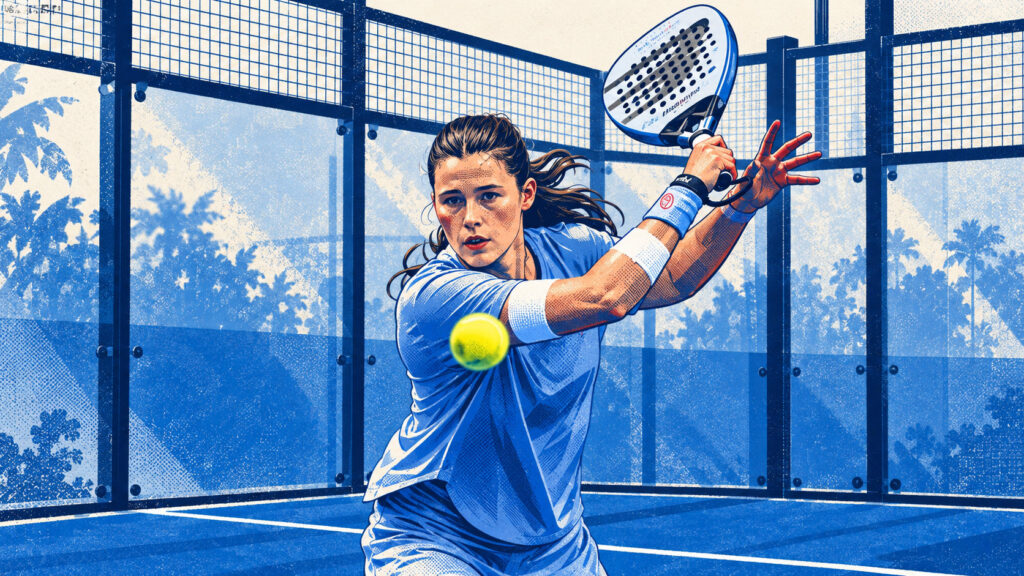
On 13 September, Bo Luttikhuis and Janine Hemmes missed out on the final in Phuket. They had taken the first set, only for Elsa Terranova and Angelina Neizvestnaya to come back and win. Seven days later, the same four players met in Bangkok. This time it was the final. This time the Dutch pair won: 6–4, 6–0.
Different city, different result. The players who had left one tournament disappointed finished the next one holding the trophy.
That feels like a good place to start a story about padel growing in Thailand. We tend to reach straight for court counts, opening announcements and photographs of new clubs. Those things matter. So does being able to follow a sporting story into the following week, without leaving the country.
September gave us exactly that. The main draws of the FIP Bronze High Velocity Phuket ran from 11 to 13 September, followed by the FIP Silver High Velocity Bangkok from 18 to 20 September. Two consecutive CUPRA FIP Tour events, both with men’s and women’s competitions.
There are quite a few people behind those two lines on a calendar. They deserve a little space in the story.
In Phuket, the titles took some work
WAREHAUS.club, in Choeng Thale, hosted the Bronze on its covered courts, with an advertised €8,500 prize fund.
Héctor Vázquez López and Álvaro López Luque won the men’s final against Mattia Di Bari and Andrés Calzada Felici, coming back from a first-set tiebreak defeat to win 6–7, 6–3, 6–3. It was Vázquez’s third CUPRA FIP Tour title of the year, after two wins in Hong Kong, and López’s first of 2026.
“Champions” is a wonderfully tidy word for a day that included going a set down in the final.
Elsa Terranova and Angelina Neizvestnaya took the women’s title with a 7–5, 7–5 win over Jimena Díaz and Alba Vázquez. First, they had to get through Luttikhuis and Hemmes in the semi-finals, recovering from a set down to win 3–6, 6–4, 6–3.
Two close sets in the final, after three in the semi-final. There was plenty of padel between arriving at the club on Sunday and leaving with the trophy.
Bangkok offered another chance
The next stop was Pista Samakom Racquet & Social Club in Pak Kret, Nonthaburi, within the Bangkok metropolitan area. Its Silver event carried an advertised €18,000 prize fund.
Gonzalo Rubio and Álvaro Montiel Caruso won the men’s title, beating Ignacio Archieri and Pablo Sánchez Vicente 6–3, 6–3. In the semi-finals they had stopped Phuket champions López and Vázquez, 7–6, 6–4. The Bronze winners had made another serious run, rather than simply moving their luggage to the next city.
For Rubio, Bangkok also meant a 17th CUPRA FIP Tour title, putting him at the top of the circuit’s all-time winners list in the FIP’s report of the event.
Then came the women’s rematch. Janine Hemmes and Bo Luttikhuis beat Terranova and Neizvestnaya 6–4, 6–0. The pair who had been stopped in Phuket had their answer in Bangkok.
These connections give people something to follow. You remember who lost, who was playing well and what happened when they met again. After a while, you are following the players as well as checking a result.
For that to happen, somebody has to put on the next tournament.
Less than three years ago, it was the first visit
In November 2023, the FIP announced the CUPRA FIP Tour’s first arrival in Thailand. The FIP Promotion Padel Asia in Phuket had 22 pairs in the men’s draw and 13 in the women’s.
That is worth remembering now. The distance travelled becomes easier to appreciate when you have a starting point, rather than another claim that everything is getting bigger.
In June 2025, the circuit returned to Phuket for a Bronze at Blue Tree. The federation’s preview counted players from 26 countries in the men’s field. In May 2026, Samui and Phangan hosted consecutive events, with Alba Pérez and Alba Gallardo winning both women’s titles.
Padel Tropical Samui and Zen Padel are part of that island chapter. September has added WAREHAUS and PISTA to the sequence: different venues, different teams and more opportunities to compete.
The first FIP tournament in a country is a useful milestone. It is not the date on which everyone there discovered padel. Clubs, coaches and regular players were already putting in the work, and their part in the story deserves to stay visible.
A thank-you that goes beyond the initials
The International Padel Federation deserves recognition for bringing Thailand into its circuit and sustaining that presence. International tournaments offer players a place to compete for ranking points and give the local community a chance to watch that level of padel close to home.
But the thank-you would be a little thin if it stopped at the federation.
Asia Padel Events promotes and delivers FIP competitions in the region, working with host clubs and sporting partners. Its team is listed at the player desk for both September tournaments. That is one of the practical links between an international calendar and a competition that actually happens on court.
The official event records name Alenna Dawn as tournament director and Sergi Biurrun as main referee for both Phuket and Bangkok. Naming them, alongside their teams, seems fairer than putting “thanks to the organisers” at the bottom and moving on.
Then there are the jobs that attract little attention when they go well: sorting out schedules, looking after players, arranging services and keeping the venue ready. A shuttle from the hotel does not earn FIP points. It is still rather helpful if it arrives before the match.
WAREHAUS and PISTA deserve recognition as September’s hosts. Blue Tree, Padel Tropical and Zen Padel belong in the wider story too. This has taken more than one club, one island or one team.
Coverage has a role as well. Asia Padel Events lists High Velocity in production and Padelgrapher in photography. Streams, photographs and match coverage let a tournament reach people who cannot stand beside the court.
And the work between international visits matters: local leagues, coaching, junior sessions and club competitions. The Thailand Padel Association’s Thai League gives Thai players another competitive structure to take part in. International events and regular local play each have a job to do.
What stays after the final?
Imagine someone who has just started playing turning up to watch. They might remember a spectacular smash. They might also notice something quieter: where a pair waits, when they choose to defend, or how they get out of an awkward position.
Perhaps they go back to their next lesson with a new question. Or with something they now want to practise.
We do not know how often that happens. It would be a lovely number to have. Bringing competition closer makes it possible, which is already a sensible reason to keep doing it.
Two successful tournaments cannot solve every question about access, coaching or opportunities for local players. There is work to do between one edition and the next. That is precisely why the people taking responsibility for a part of it deserve recognition.
So, thank you to the FIP, the promoters, the clubs, the officials, the support teams and the players who gave these two weeks their stories. There are results worth celebrating and something worth continuing.
For now, September leaves us with a rather good example: lose a semi-final in Phuket, prepare for another week, then win a final in Bangkok.
Having that next opportunity is a form of growth too.
Reader comments
Share your view. Your email address will not be published.
Leave a Reply