
Players & People
Thailand Finishes Fourth at APPC 2026 After Defeats to the Philippines and India
Thailand finished fourth in the professional-team competition at the 2026 Asia Pacific Padel Cup in Manila. The team reached the semi-finals before losing 3–0 to the Philippines, then fell 4–1 to India in the contest for third place.…
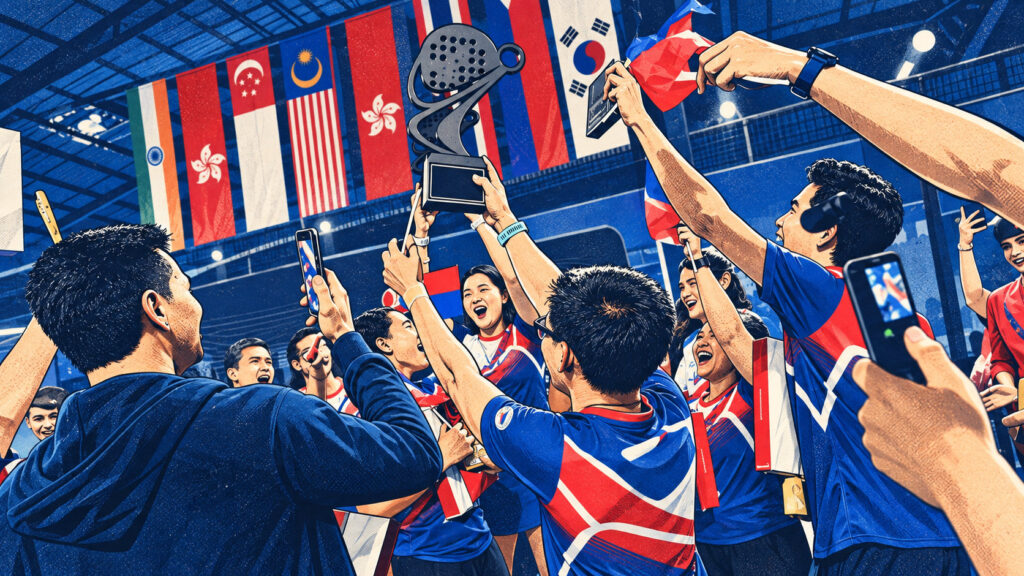
Thailand finished fourth in the professional-team competition at the 2026 Asia Pacific Padel Cup in Manila. The team reached the semi-finals before losing 3–0 to the Philippines, then fell 4–1 to India in the contest for third place. Those results place Thailand among the event’s last four while giving the side a clear measure of the opposition it faced in the final stages.
The competition took place from 25 to 28 June at Play Padel McKinley. For Thai followers, the Manila campaign provides a regional team result to set alongside the country’s preparations for its Asian Games padel debut later in the year. It records an achievement in reaching the semi-finals and the challenge of converting that position into a podium finish.
The final two ties
The Philippines stopped Thailand’s progress towards the championship match with a 3–0 semi-final victory. India then won the third-place tie 4–1. These are team-tie scores, describing the outcome of the contests between the sides. They should be understood separately from the set and game scores within individual matches.
That distinction matters to a sporting assessment. A team score identifies who advanced and by what overall margin, while individual match scores can reveal whether particular partnerships were competitive for long periods. Both levels of detail have a role, but they answer different questions about how a tie developed.
Thailand’s fourth place therefore supplies a useful starting point for analysis. The team had done enough to reach the final four, then encountered two opponents capable of winning the decisive ties. The result gives the Thai programme specific regional reference points rather than a general impression of where it stands.
Partnerships within a team campaign
Team competition asks players to contribute to a result larger than their own match. Each pairing has its immediate task, while the rest of the delegation shares the consequences of that performance. Preparation has to take account of the combinations available and the demands of the event’s particular format.
For a partnership, an international tie can expose details that ordinary practice leaves less visible. Returning consistently against stronger serves, defending under sustained pressure and choosing when to change the pace all become more demanding when the opposition gives away fewer easy points. Those experiences can supply precise objectives for subsequent training.
The value of a fourth-place finish is therefore partly in what follows it. A result becomes more useful when the people involved can identify which parts of their game held up and which need work. The next training block can then respond to evidence from competition instead of relying only on comfortable practice conditions.
A place in Thailand’s regional record
The Manila result follows Thailand’s consolation success at the 2025 APPC in Kuala Lumpur, where it beat Pakistan in the consolation final. The two outcomes belong to different stages of their respective events. Together, they give followers a developing record of Thailand participating in regional team competition across consecutive seasons.
They also show why progression should be considered in context. Opponents, team compositions and competition formats can change between editions. A finishing position is meaningful within the event that produced it, while a longer assessment benefits from looking at the actual ties and partnerships involved.
The Asian Games introduces another context again, with men’s doubles and women’s doubles medal events. The announced Thai squad for Aichi-Nagoya is a separate selection for that competition. Manila contributes recent regional experience to the wider picture, but the later draw will create its own sporting demands.
What fourth place leaves to build on
Thailand’s campaign gives its players and coaches something concrete to work from. Reaching the semi-finals puts the team into the decisive part of a regional event. Losing the next two ties identifies the level required to turn that opportunity into a medal position.
For supporters, the appropriate response can contain both elements. There is a result worth recognising and a competitive gap worth understanding. The usefulness of the APPC lies in bringing those questions onto court, where they can be answered through matches against regional opponents.
The final record from Manila is clear: fourth place for Thailand, with defeats to the Philippines and India closing the campaign. The next task is to use that experience in preparation and return better equipped for the situations that proved most difficult.
Reader comments
Share your view. Your email address will not be published.
Leave a Reply