
Competition
Zurita and Melero Win Two Tiebreaks to Take the 2025 Tokyo Bronze Title
Nicolas Zurita and Miguel Melero won the FIP Bronze Tokyo men’s final in July 2025 by the narrowest straight-set route, defeating Diego Arredondo and Sergio Alba 7–6, 7–6. Rosalie van der Hoek and Camila Ramme took the women’s…
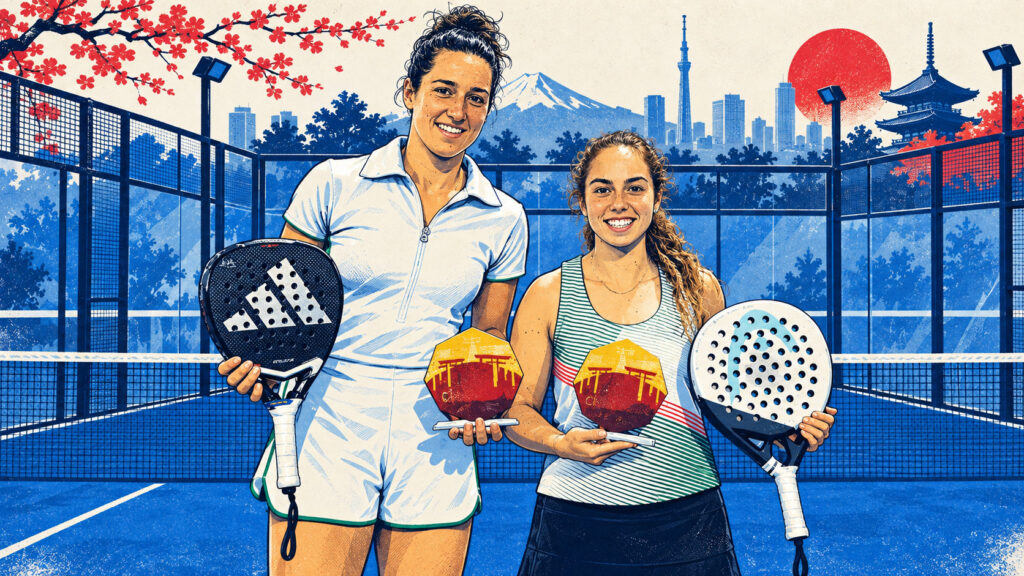
Nicolas Zurita and Miguel Melero won the FIP Bronze Tokyo men’s final in July 2025 by the narrowest straight-set route, defeating Diego Arredondo and Sergio Alba 7–6, 7–6. Rosalie van der Hoek and Camila Ramme took the women’s title with a 6–2, 6–1 victory over Japan’s Kotomi Ozawa and Saki Tsukamoto.
The tournament ran from 9 to 13 July, with its main draw beginning on 11 July. Although carrying the Tokyo name, the event’s listed venue was Padel and Futsal Hare Nochi Hare in Chiba. That distinction places the competition at its actual playing location within the wider Japanese setting.
The men’s final gave the tournament a particularly tight finish. Neither pair established a set-winning margin before a tiebreak, and Zurita and Melero had to win both of those decisive passages to complete the match without a third set.
Close matches need precise decisions
A pair of tiebreak sets creates a different impression from a routine straight-set result. The losing partnership remained level through twelve games in each set before the separate tiebreak sequence decided the outcome. The final therefore deserves to be remembered for its closeness as well as its champions.
For club players, the relevant lesson concerns the scale of the next decision. At a tight score, trying to solve the entire match with one ambitious shot can make the immediate task harder. A reliable return or a well-chosen defensive ball may be more useful than a spectacular attempt from the wrong position.
The published result does not explain the tactical detail of Tokyo’s tiebreaks. It does show that Zurita and Melero won two separate contests at the point where the sets had remained unresolved. That repeated success is the distinguishing feature of their final.
Japan’s women reach the title match
Ozawa and Tsukamoto’s place in the women’s final gave the home country a partnership to follow into the last round. Reaching that stage and losing decisively are both parts of the tournament record; neither needs to erase the other.
For a developing player, a final appearance can reveal the next standard to reach as clearly as it confirms progress already made. The difference becomes specific: an opponent’s consistency, the demands of holding serve or the difficulty of keeping control when the other pair repeatedly finds a strong position.
Van der Hoek and Ramme supplied that final challenge in Tokyo. Their 6–2, 6–1 victory gave them the women’s trophy and a much wider finishing margin than the men’s champions recorded. The contrast makes the two finals distinct parts of the same event.
A useful stop in the regional record
For Thai supporters looking back through the Asian season, Tokyo connects a number of familiar competitive names. Following players across host countries helps reveal how partnerships develop and how the balance changes with different opponents.
It also encourages a more accurate view of tournament labels. The city name identifies the event, while the venue address tells players where the matches are staged. In this case, Chiba was the practical location for the competition, a detail that belongs alongside the dates and results in its history.
The record remains useful beyond travel details. A completed draw provides a reference for future meetings, especially when the same pairs face each other again. A close defeat may suggest unfinished business, but the next encounter still has to be treated as a new match with its own circumstances.
Tokyo’s July 2025 story is clear enough without adding imagined rallies or turning every result into a prediction. Zurita and Melero won two tiebreaks to secure the men’s title. Van der Hoek and Ramme beat a Japanese pair in the women’s final. Together, those outcomes capture both the fine margins and the decisive finishes that can share the same tournament weekend.
Reader comments
Share your view. Your email address will not be published.
Leave a Reply