
Competition
Koek and Kurz Command Pingyuan Silver as the Men’s Final Goes the Distance
Marcella Koek and Victoria Kurz left the FIP Silver Pingyuan with a women’s title won in emphatic fashion, while Roberto Belmont and Guillem Figuerola needed three sets to settle the men’s final. The July 2026 tournament in China…
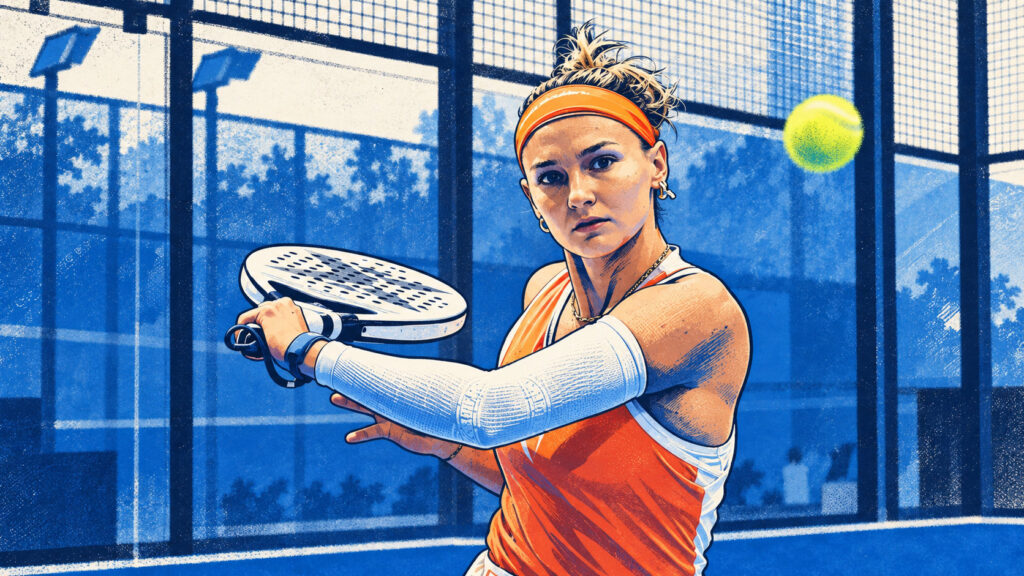
Marcella Koek and Victoria Kurz left the FIP Silver Pingyuan with a women’s title won in emphatic fashion, while Roberto Belmont and Guillem Figuerola needed three sets to settle the men’s final. The July 2026 tournament in China produced two very different routes to the same reward.
Koek and Kurz defeated Camila Ramme and Kotomi Ozawa 6–2, 6–1 in the final. FIP’s tournament report credited the champions with conceding only six games across their entire run. Their semifinal had ended 6–0, 6–3 against Alba Pérez and Venise Chan, another decisive result on the way to the trophy.
The men’s title match was much tighter. Belmont and Figuerola overcame Julian Prins and Youp de Kroon 6–2, 2–6, 7–5, completing a final in which the first two sets were shared by identical margins. The tournament’s published calendar placed the event in the 7–12 July window.
Two ways to finish a tournament
The contrast between the finals gives Pingyuan its strongest sporting theme. One partnership arrived at the closing match and maintained the level that had carried it through the draw. The other had to rebuild its advantage after losing the second set and entering a deciding contest with the title still open.
For a club player, those are recognisable situations even if the competitive standard is very different. A comfortable lead can create its own distractions. A match that has become close after a strong start demands a different response, especially if frustration begins to replace the decisions that worked earlier.
The results do not reveal every tactical choice made in either final. They do establish the shape of the challenge. Koek and Kurz kept their opponents from taking a set throughout the tournament; Belmont and Figuerola had to win again after the match had been reset to one set each.
Consistency deserves its own attention
Spectators naturally remember dramatic turning points. A long comeback, a deciding-set finish or a spectacular winner gives a match an obvious moment to revisit. A dominant tournament can be less theatrical while still requiring an exceptional level of concentration across several encounters.
Conceding so few games leaves little space for a loose start or a prolonged dip. Every new opponent brings different returns, serving patterns and preferences around the net. The winning pair still has to identify what is happening and keep the partnership functioning across those changes.
That is why the women’s result should be read as a complete run rather than just a short final. The accumulated scoreline makes the consistency visible. It also creates an interesting reference point for future meetings, when another pair will try to find the resistance that was largely missing in Pingyuan.
The final set as a separate contest
In the men’s final, the 7–5 deciding set placed the finish near the narrowest possible margin before a tiebreak. A score like that gives both pairs reason to revisit the encounter, though the record alone cannot tell us which individual point carried the greatest weight.
For players learning from the result, the useful idea is to treat a deciding set as a fresh competitive task. The opening set has already been won and the second already lost. Neither can be replayed. What remains is the quality of the decisions made with the score still level and the match available to either side.
Pingyuan also belongs to the wider regional picture followed by Thai padel supporters. Names such as Ozawa, Pérez and Chan connect different Asian draws, helping a season feel like an ongoing competition rather than a collection of isolated weekends.
The Chinese event added clear outcomes to that picture: Koek and Kurz setting a commanding standard in the women’s draw, and Belmont and Figuerola finding the final advantage in a much closer men’s contest. Together, the two finals offered a useful reminder that winning can require sustained control or a successful reset, depending on the match in front of the pair.
Reader comments
Share your view. Your email address will not be published.
Leave a Reply